






About · Theresa Berg · Chicago

Eighteen Years of Making Digital Products Human

AI product designer in Chicago. I design conversational and agentic AI for enterprises: the moments when a system has to explain itself, ask first or hand the work back to a person. Years of code, brand and design systems came first, so every decision here has a prototype and a reason behind it.

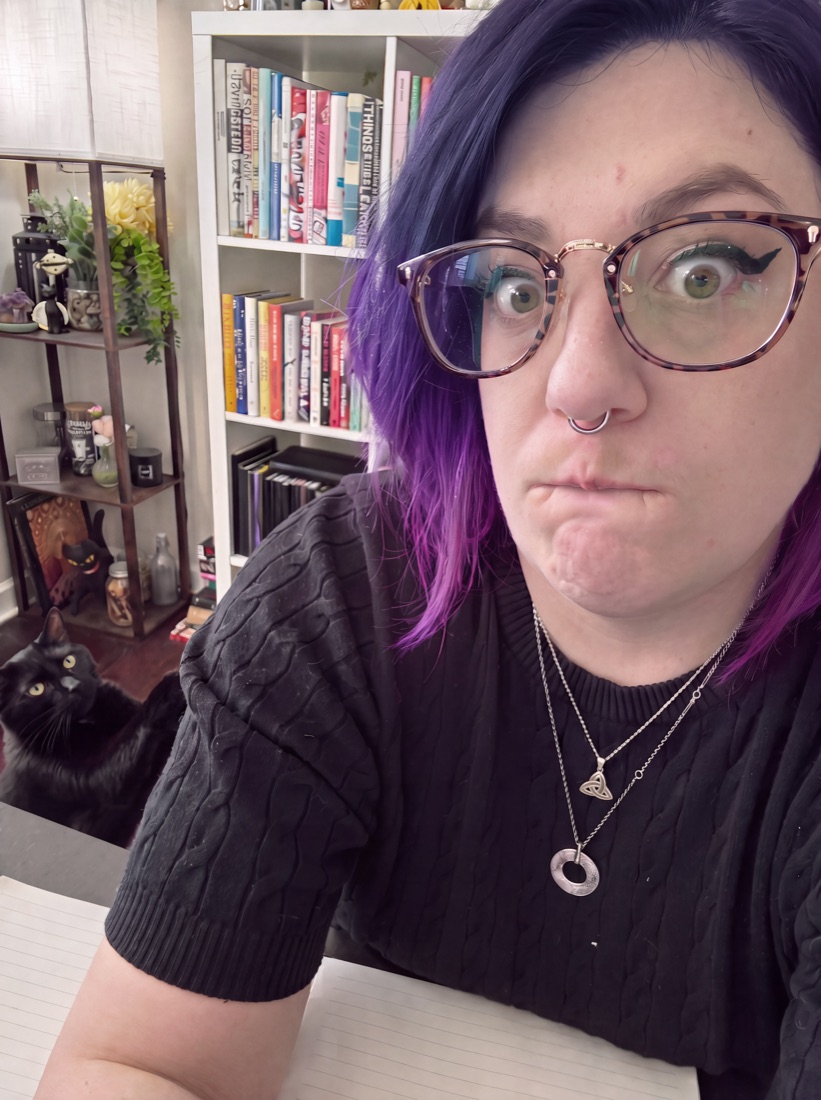
Theresa at her desk, making a skeptical face at the camera, with her black cat Carmy behind her.
My Meow-nager, Carmy, checking in on me...

The short version

I started as the kid building GeoCities pages at the kitchen table, and I never stopped believing that design and code are the same conversation. That thesis carried me through marketing sites, brand identities, a decade of design systems, and into the place I work now: the seam where an intelligent system meets a person who has to trust it.

18
years designing software, from front-end code to brand to product
10+
years building and governing design systems, in-house and in consultancies
1st
AI & agentic designer at a Fortune 500, where I founded the practice and shipped the AI assistant

The Story

2006–2010

It Started on the Family Computer

I was the kid who snuck onto the family computer outside my scheduled time, building websites, running Dungeons & Dragons forums and recruiting parties in IRC. Somewhere in there I learned a screen was something I could make. Design school at Northern Illinois gave the habit a discipline (and two electric shocks from a lamp I built for a packaging class).

Northern Illinois University · BFA, Visual Communication · 2006–2010
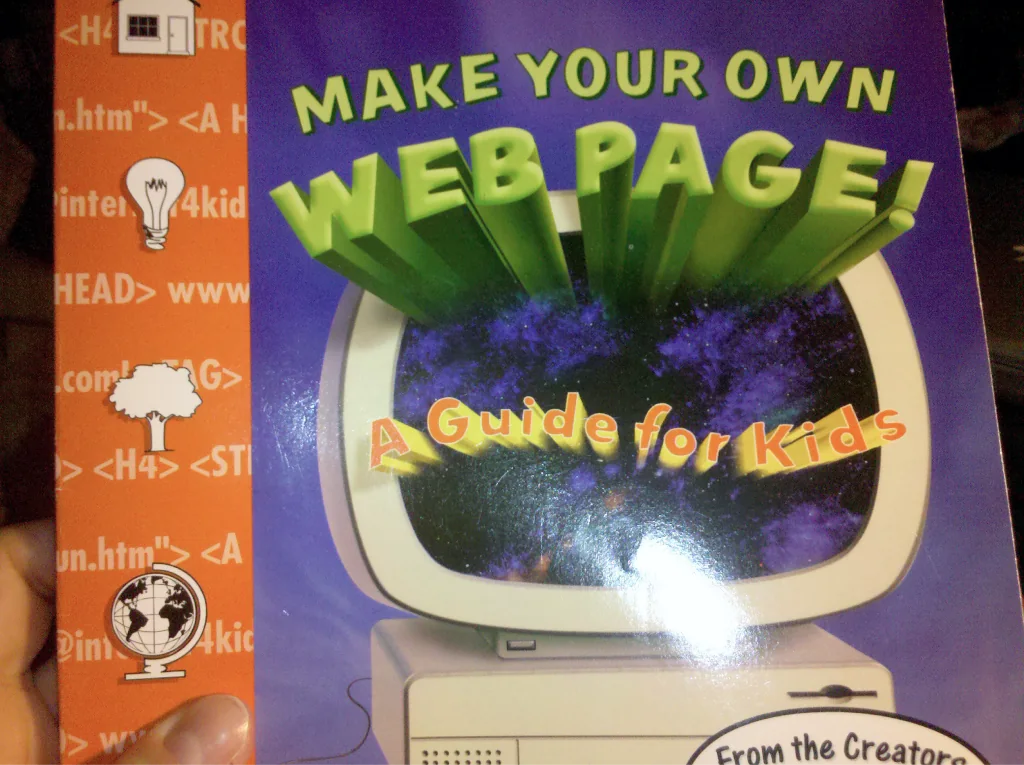
A paperback copy of “Make Your Own Web Page! A Guide for Kids”: the cover shows a glowing old computer with HTML tags around its edges.

2009–2015

Translation Was the Job Before It Had a Name

My first jobs sat between disciplines: visual design, brand, marketing sites and the HTML, CSS and PHP that shipped them. I designed in the morning and built in the afternoon, so I learned early what a design promises and what it costs to keep that promise in code. That is still the most useful thing I bring to a team: turning ambiguity into decisions people can act on.

Loud Dreams, my own practice, since 2009 · Forsythe · SignatureForum · SurePayroll · Wargaming · 2009–2015

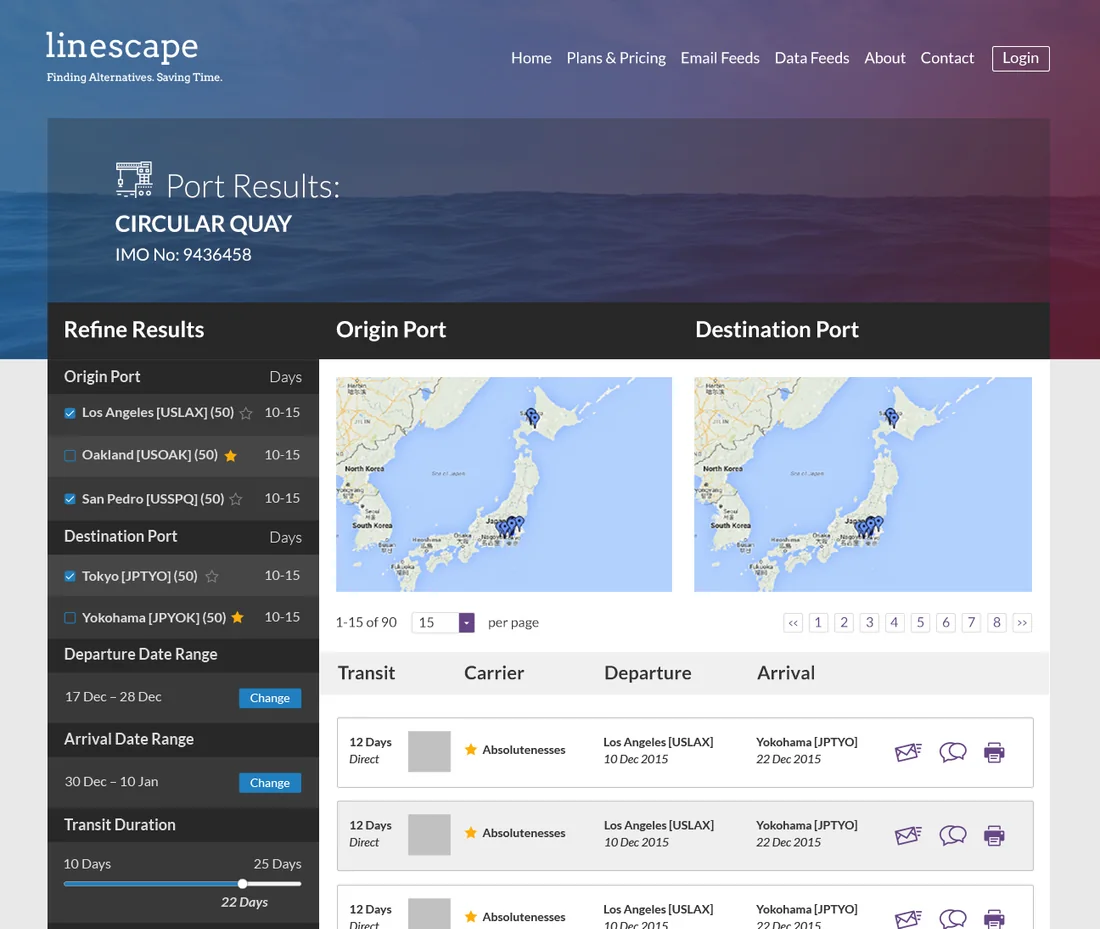
An early web application I designed and built: a shipping-search screen with filters on the left, two maps and a table of carriers and departures.

2015–2024

Good Decisions Should Outlast the Person Who Made Them

My work moved from single deliverables to the conditions that make good design repeatable: advocating for UX until it became a real role when it was an early discipline, bringing engineering roles into product definition early, and building design systems with matching front-end libraries so design and code stayed aligned. At one consultancy, the approach I introduced was still in use when I came back years later. That is the best review a system can get.

Tecture · SteelSeries · Highland · CareerPlug · 2015–2024

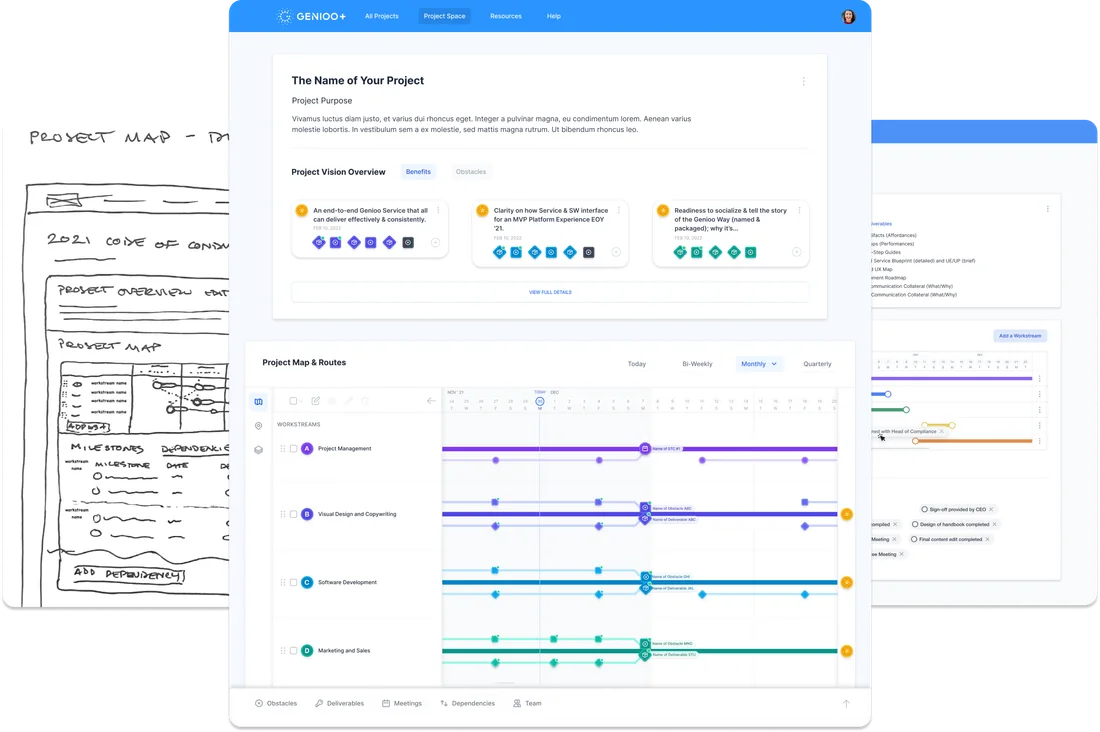
A project-planning screen from a design system for a software product, next to hand-drawn sketches of the project map.

2015–2024

A Form Can Shape a Clinician’s Afternoon

Healthcare and pharma taught me the need for due diligence and discipline. Years of medical and pharma clients, a journey-mapping engagement for a national medical association, and the first version of an HCP portal for an immunotherapy, where physicians’ offices manage training, prescriptions and prior authorization were all prep work for today. Regulated work taught me necessary precision: every line went through medical and regulatory review. Our choices have a real impact on real people.

Tecture · Highland · Think Company · Ecolab · 2015–2024

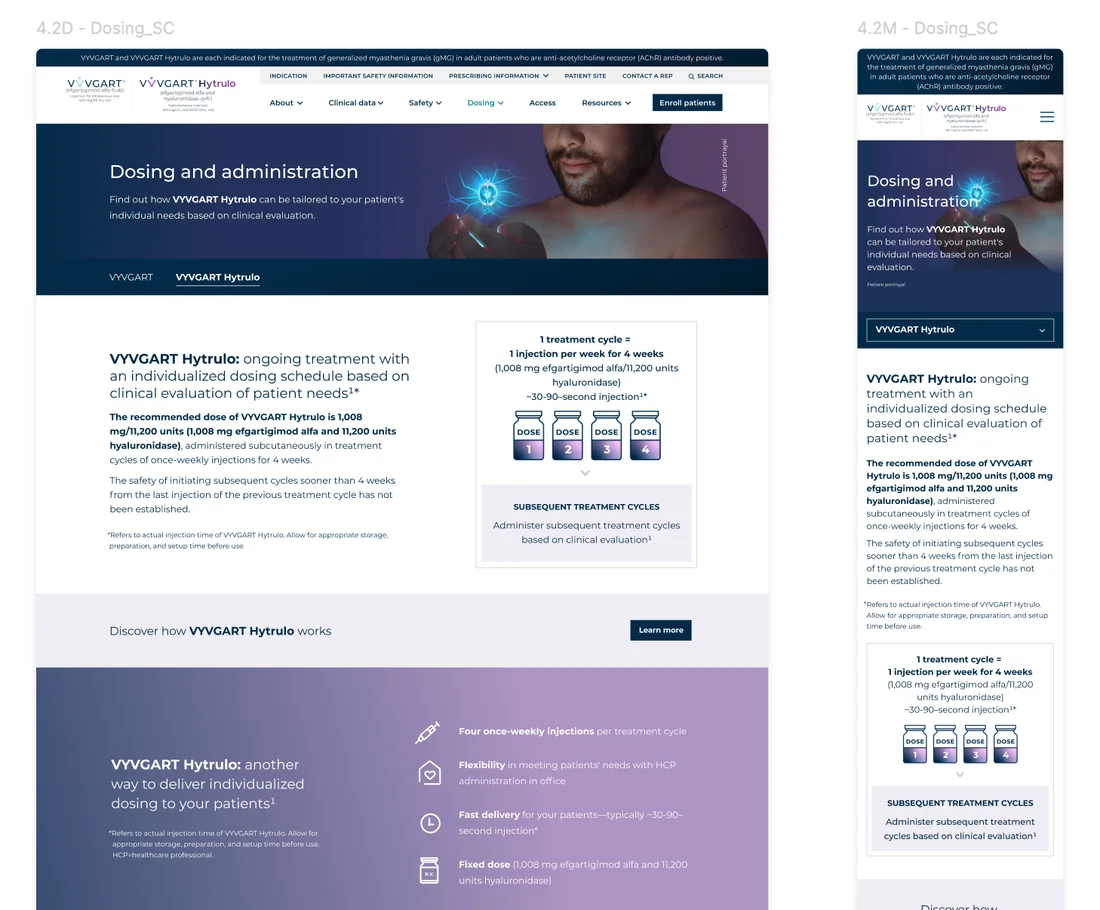
A dosing and administration page from a pharma website for healthcare professionals, shown in desktop and mobile layouts.

2024–2026

Where the Agent Acts, Where It Defers

In March 2025, I became Ecolab’s first and only AI and agentic designer. I started from a journey map I facilitated with the field teams, worked with Microsoft on where AI could actually help, then designed the assistant, the agents and the rules between them: where the agent acts, where it defers, how a person takes over. I learned MCP from a developer’s docs and built a working Claude-to-Figma proof of concept. The four case studies are that work.

Ecolab · Lead Product Designer, Conversational & Agentic AI · 2024–2026

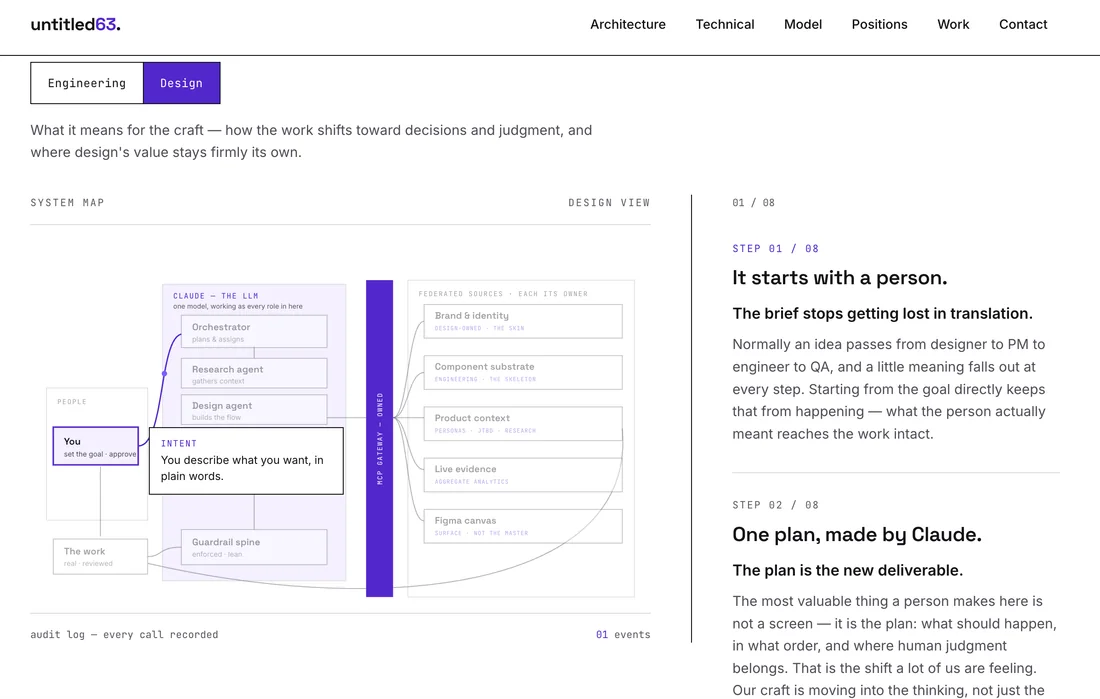
A page from my own site on how the work shifts toward decisions and judgment: a diagram of a person directing an orchestrator and agents, with numbered steps beside it.

2026 →

AI That Gives Clinicians Their Time Back

Through Loud Dreams, I created a clinician-facing agentic proof of concept aimed at the time clinicians lose to administrative work, and presented it to physicians and researchers affiliated with the University of Chicago’s School of Medicine. That conversation became an ongoing collaboration to validate it. One research oncologist put it plainly: “This is why I have hope.”

Loud Dreams · Independent · 2026

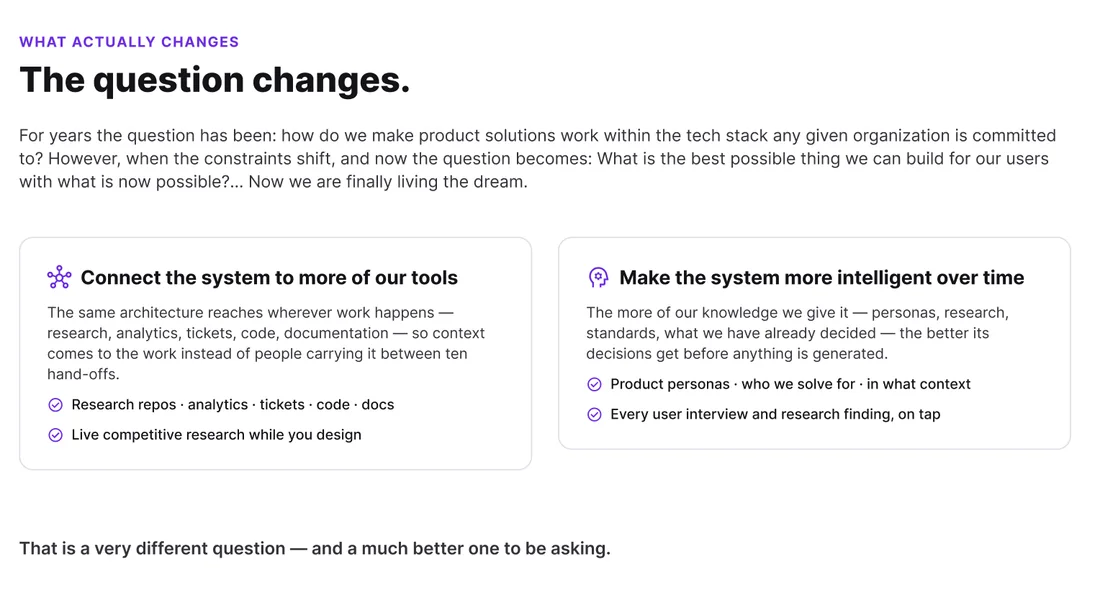
A slide titled “The question changes” with two ideas: connect the system to more of our tools, and make the system more intelligent over time.

How I Work

AI Proposes.
Humans Decide.

The system suggests; the person stays in charge, including the choice to walk away.

Calibrate Trust.
Don’t Demand It

The system says what it knows, what it doesn’t and where its answer came from.

Design to Learn.
Build to Understand.

A working, coded prototype answers questions a Figma prototype, nor slide can.

Off the Clock

I am obsessed with patterns, systems, and organizing my life, my knowledge, and my experiences to align with what I see. I am chronically on some kind of digital device, learning, creating, or connecting with my friends. I read mythology and folklore, ancient and modern history, and see all the ways it still ties into the present day, even AI. I enjoy finding the hidden connections, systems, and patterns behind every day forces and the way people have experienced them since the dawn of time. When not tinkering away at whatever project, I am cozying up with my cats, Carmy & Desmond, spending time with friends, or trying to square away more time with nature.

  • Mythology
  • Symbolism
  • Cross-Domain Patterns
  • Design × Engineering
  • Film Photography
  • Chicago

Behind Isn’t It Chironic

The Name, the Mark and the System

A brand is a trust signal. This one is built like the products I design: a story you can check, a mark with a reason, and a system you can open.

Chiron · The centaur

The wounded healer in our sky

In Greek myth, Chiron was the centaur unlike the others: wise, steady, famous for his knowledge of medicine. He taught Asclepius, Achilles and Jason. A poisoned arrow, loosed by accident, left him with a wound he couldn’t heal, and he kept teaching anyway. Jung later named the pattern “the wounded healer”: the hurt is part of what lets you help.

Designers are in Chiron’s position right now. AI arrived like that arrow, and we are also the people best placed to design the way through it.

“Ironic” · The song

The song my mom talked me through

In middle school my mom, who loved Alanis Morissette, sat me down with “Ironic.” Life isn’t fair, she said. It will knock you down. But listen to how the song ends: with the surprise that life can also turn out to be on your side.

That’s how I feel about AI. The technology behind so much of this moment’s ache is the same one that gives me the most hope.

Chiron + “Ironic” = isn’t it chironic.
A wound, a way through, and the chronic irony I can see.

The Mark, the Color, the Type and the System

isn't it chironic
Gradient
isn't it chironic
Dark
isn't it chironic
White

The mark

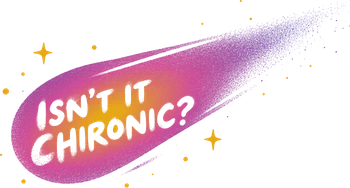
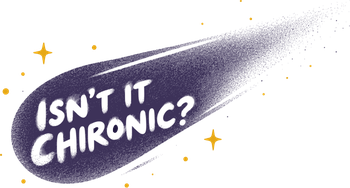
A comet, facing left on purpose

It crosses the sky instead of heading at the viewer. That is how I think about AI: not a strike from outside, but a new force that entered our sky and settled into orbit, close enough that we are in a relationship with it, far enough that it doesn’t destroy us. The lettering is cut out of the comet’s grain, so the mark takes on whatever is behind it. It comes in three treatments: gradient (the one used across this site), dark for light surfaces and white for dark ones.

Saturn2060 ChironUranus

In the sky twice

2060 Chiron

In 1977, astronomer Charles Kowal found an icy body orbiting between Saturn and Uranus and named it Chiron. In 1989 it grew a comet’s glowing cloud and was reclassified as a comet. The wounded healer is a constellation and a comet.

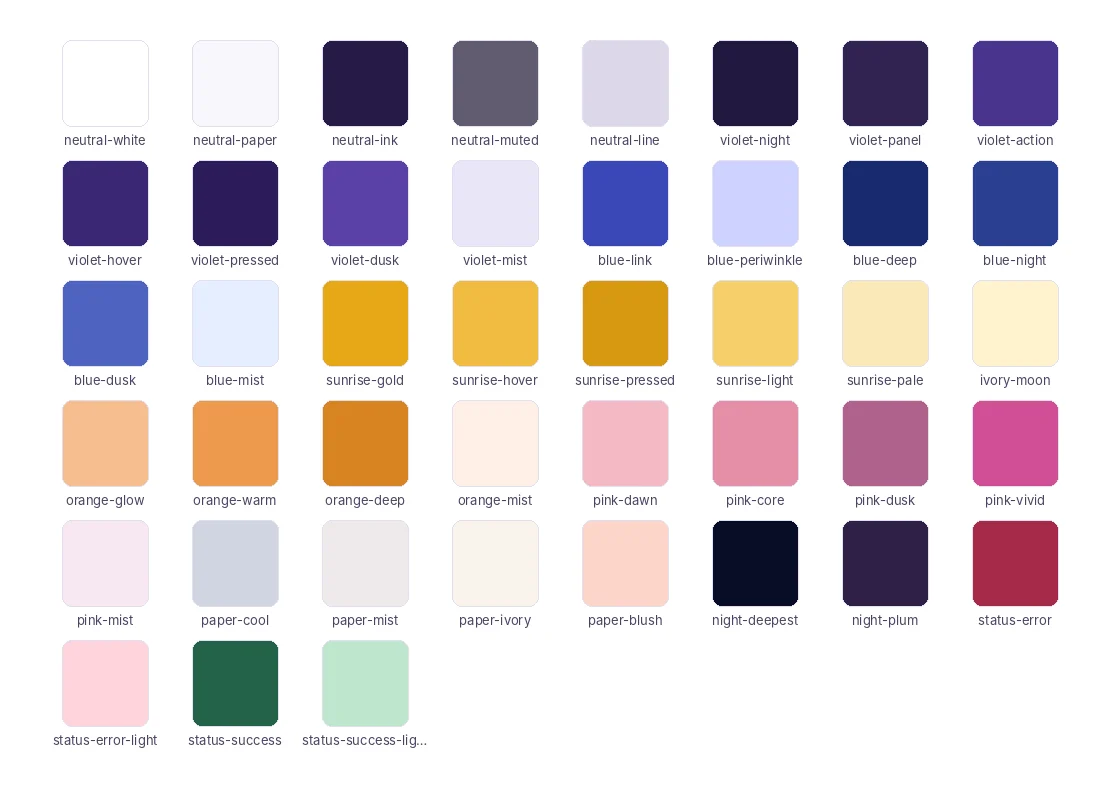
The full palette: 43 named color primitives, from neutral white and ink through violets, blues, sunrise golds, oranges and pinks to the status colors.

Color

One palette, two times of day

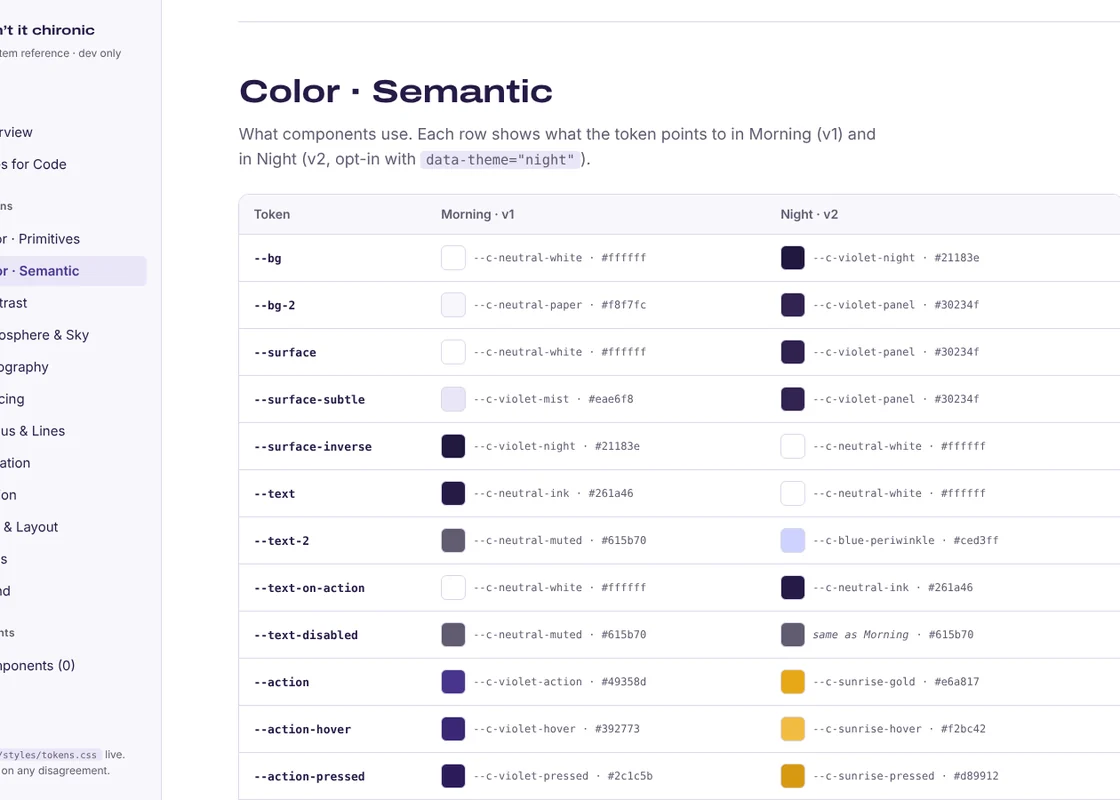
43 primitives feed 32 semantic tokens. Morning is the default; Night is the same tokens in a second mode, so a section switches with one attribute. Every text pair passes WCAG AA in both.

Archivo Expanded Bold · headings

Inter · reading

Type

Archivo Expanded for headings, Inter for reading

Bold Expanded headings carry the brand’s voice; Inter keeps long reads comfortable. A 44 to 56 character measure does the rest.

The styleguide this site is built from: the semantic color tokens with their Morning and Night values.

The system · Live

Open the styleguide this site is built from

Every token, component and contrast check, read live from the code. It is the same storybook approach I used for the enterprise AI design system in Case Study 3, applied to my own brand. What you see is what ships.

How it’s made

By hand, with help I asked for

  • Designed in Figma on variables and modes
  • Built with Astro and plain CSS
  • Coded with Claude Code, from a brief I wrote
  • Illustrations from a charter: rules for makers and models
  • Hosted on Cloudflare

The Paper Version

A two-page résumé, impact-first, for when a form asks. It has the dates this page leaves out.